
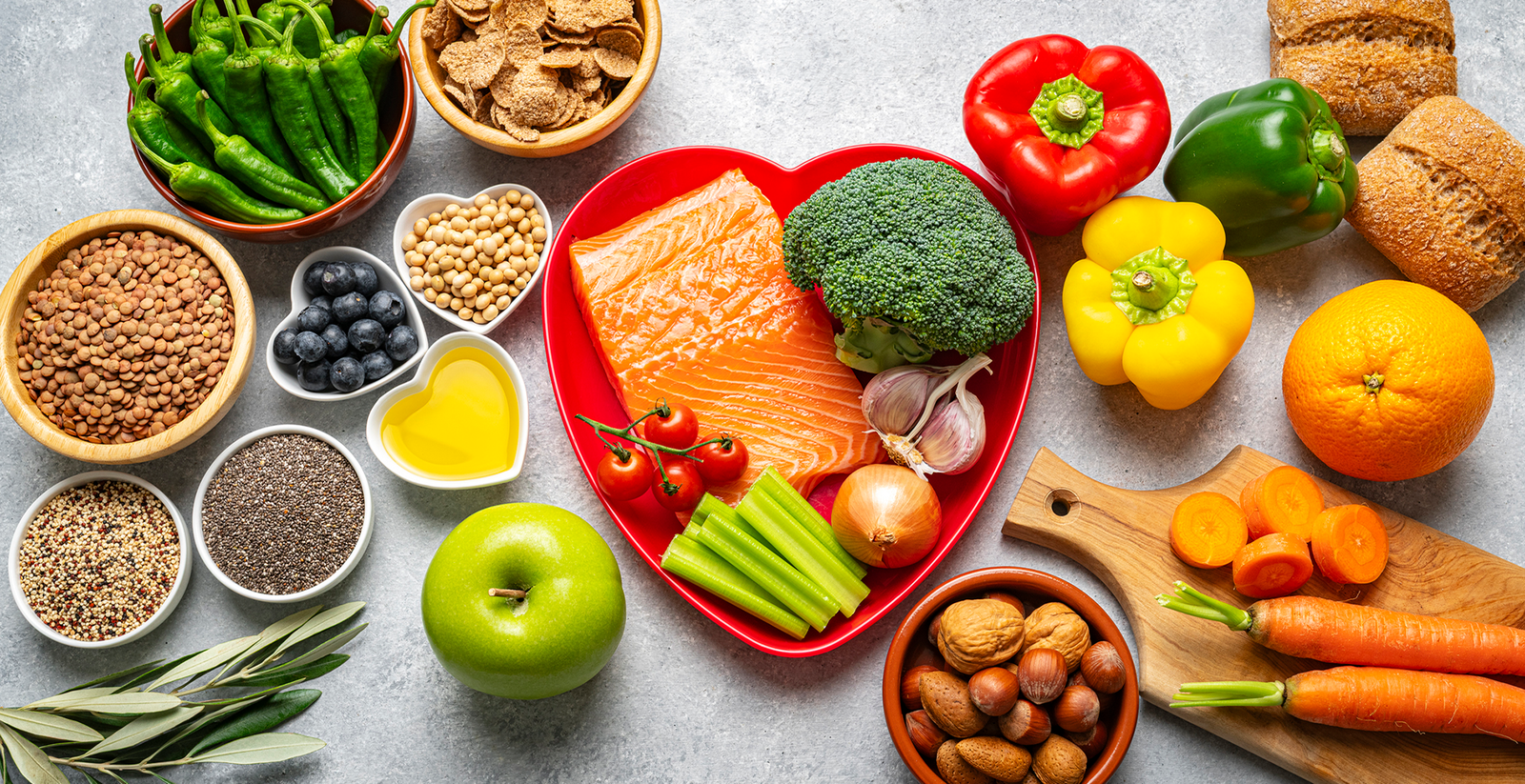
Plant sterols lower LDL by competing with cholesterol for absorption in your gut, so more leaves the body instead of entering your bloodstream. Expect steady, modest changes—measured in single-digit percentage drops—when you’re consistent for weeks. Sterols show their best results when taken with meals (where they can “compete”), and they stack nicely with high-fiber foods [1][2][3].
How much does it take?
Research suggests ~2 g/day of plant sterols can trim LDL by roughly 5–10% on average, typically within 8–12 weeks [2][3]. You’ll see LDL changes, not big shifts in HDL or triglycerides—this is a targeted nudge, not a complete lipid remodel [1][3].
Table of Contents
Soluble fiber: oats, flax, and beans
Soluble fiber traps some cholesterol in the gut, lowering the amount your body absorbs. Meta-analyses show dose-dependent LDL reductions with daily soluble fiber; psyllium is a standout, but oats (beta-glucan), beans, and ground flaxseed fit easily into real meals [4][5]. Think “add a scoop” habits: oatmeal at breakfast, lentil soup at lunch, a spoon of ground flax in yogurt.
Why it matters: Soluble fiber “backs up” sterols—both work in the gut, in different ways. Together, they offer gentle, additive effects you can feel good about maintaining long term [1][4][5].
Ground flaxseed cholesterol support
Flax is an easy fiber boost with a mild, nutty flavor. For practical use, grind whole flax (or buy it ground), and add 1–2 tablespoons to smoothies, oatmeal, or yogurt. You’ll increase soluble fiber without changing your menu much—and that supports LDL in the same gut-level way as oats and psyllium [4][5].
Oat beta-glucan supplements
If you like supplements, oat beta-glucan capsules or drink mixes can top up soluble fiber on busy days. But most people can get there with food: a hearty bowl of oats, barley sides, or oat-bran muffins a few times per week. Consistency beats novelty for cholesterol; build routines you’ll keep [1][4][5].
Quick Picks
| Helper | What it targets | How to use it | Typical amount |
|---|---|---|---|
| Plant sterols/stanols | LDL (“bad” cholesterol) | With meals (fortified yogurt/spread or capsules) | ~2 g/day [1][2][3] |
| Psyllium (soluble fiber) | LDL (dose-dependent) | Stir into water or yogurt; daily | ~5 g/day often used [4] |
| Oats / beta-glucan | LDL | Oatmeal/oat bran; consider supplements if needed | Food portions that fit your day [1][4][5] |
| Ground flaxseed | LDL support via fiber | 1–2 Tbsp in smoothies, oats, yogurt | Make it a daily add-in [4][5] |
| Beans, nuts, seeds | LDL support via fiber/sterols | Rotate into salads, bowls, snacks | Food-first pattern [1] |
Make one change at a time for 8–12 weeks; recheck lipids to see what actually helped.
Plant sterols lower LDL but don’t replace prescribed care; loop in your clinician if you’re on blood pressure therapy or have high risk [1][3].
Rare condition note: avoid sterol products if you have sitosterolemia (uncommon genetic disorder) [3].
Action Checklist (3×3)
Do
Hit ~2 g/day sterols with meals; choose fortified foods you’ll actually eat. [1][2][3]
Build a fiber base: oats most mornings, beans most days, flax daily. [4][5]
Recheck LDL after 8–12 weeks to measure real-world change.
Watch
Labels on sterol-fortified foods—check grams per serving to reach ~2 g/day. [2][3]
Your total fiber jump; add gradually and drink water to avoid GI grumbles. [4]
Interactions and your care plan—coordinate with your clinician for high-risk cases. [1][3]
Avoid
Expecting HDL or triglyceride changes from sterols; the job here is LDL. [1][3]
Changing five things at once—you won’t know what moved your labs.
Abandoning prescribed therapy without medical input.
Bringing it together
Plant sterols lower LDL in a targeted way, and soluble fiber makes that nudge bigger. Keep it food-first—oats, beans, flax, and sterol-enriched foods—then use psyllium or beta-glucan supplements when life gets hectic. Small moves, done daily, add up to better numbers without upending your kitchen routine [1][2][4][5].
Frequently Asked Questions
Most people see a reduction in LDL cholesterol, but the degree varies. Genetics and overall diet play a role. "Non-responders" exist, which is why re-testing your levels after 8-12 weeks is important to see if it works for you.
Yes, but it's best added after cooking or used in low-heat baking to preserve its healthy fats. Grinding it fresh or buying ground flaxseed is essential because whole seeds often pass through the body undigested.
Generally, yes, but it must be taken with plenty of water. Without enough fluid, psyllium can cause constipation or blockages. Start with a small dose to let your gut adjust.
They can slightly reduce the absorption of fat-soluble vitamins (like beta-carotene). Eating plenty of colorful fruits and vegetables usually offsets this small effect.
Cites and Sources
No Citations
Show Citations
[1] Health claims: Plant sterol/stanol esters and risk of coronary heart disease (CHD), 21 C.F.R. § 101.83 (2026). https://www.ecfr.gov/current/title-21/part-101/section-101.83
[2] U.S. National Library of Medicine. (n.d.-c). Pubmed.ncbi.nlm.nih.gov. National Center for Biotechnology Information. https://pubmed.ncbi.nlm.nih.gov/37225641/
[3] National Lipid Association recommendations for patient-centered management of dyslipidemia: Part 2 - journal of clinical lipidology. (n.d.-h). https://www.lipidjournal.com/article/s1933-2874(15)00380-3/fulltext
[4] Ghavami, A., Ziaei, R., Talebi, S., Barghchi, H., Nattagh-Eshtivani, E., Moradi, S., Rahbarinejad, P., Mohammadi, H., Ghasemi-Tehrani, H., Marx, W., & Askari, G. (2023, May). Soluble fiber supplementation and Serum Lipid Profile: A systematic review and dose-response meta-analysis of randomized controlled trials. Advances in nutrition (Bethesda, Md.). https://pmc.ncbi.nlm.nih.gov/articles/PMC10201678/
[5] Corliss, J. (2024a, August 1). Can you reduce your cholesterol without taking a drug?. Harvard Health. https://www.health.harvard.edu/heart-health/can-you-reduce-your-cholesterol-without-taking-a-drug

